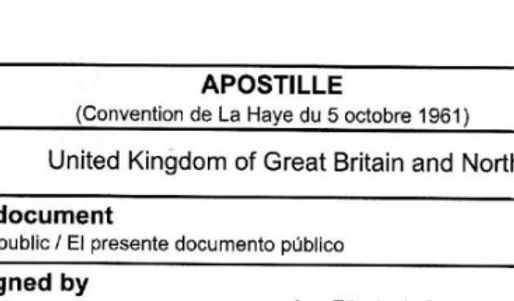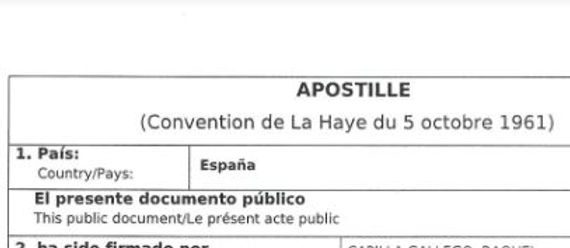
Not every country accepts an apostille. If the country asking for your document is not a member of the Apostille Convention, an apostille alone will not be enough, you will need to go through a separate legalization process instead.
This process is called attestation or legalization. It means your document has to pass through the relevant Ministries in Spain and then get a final stamp at that country's Consulate or Embassy in Spain, before it will be accepted.
As of 2019, the countries that are not members of the Apostille Convention, and so require this fuller legalization process, are:
Afghanistan, Algeria, Angola, Bangladesh, Benin, Burkina Faso, Burma Myanmar, Cambodia, Cameroon, Canada, China, Congo Republic, Congo Democratic, Ivory Coast, Cuba, Egypt, Eritrea, Ethiopia, Ghana, Guinea, Haiti, Indonesia, Iran, Iraq, Jamaica, Jordan, Kenya, Kuwait, Laos, Lebanon, Libya, Macedonia, Madagascar, Malaysia, Mali, Mauritania, Mozambique, Myanmar Burma, Nepal, Niger, Nigeria, Pakistan, Palestine, Qatar, Rwanda, Saudi Arabia, Senegal, Sierra Leone, Singapore, Sri Lanka, Sudan, Syria, Taiwan, Tanzania, Togo, Thailand, Turkmenistan, UAE (United Arab Emirates), Uganda, Vietnam, Yemen, Zambia, Zimbabwe.
If your document is headed to one of these countries, plan for the extra time this process takes, since it involves more than one office and a final step at the consulate or embassy itself.