If you or someone close to you becomes involved in a criminal case in Spain, whether as a suspect, a victim, or a witness, it helps to understand how the process actually unfolds. It happens in two distinct phases, and knowing what each one involves takes away some of the uncertainty.
A criminal process starts as soon as the judicial authority learns of a possible crime, whether through a police report, at the on-duty court, or through a direct complaint to the court.
Phase one: investigation
The first phase is about working out whether a crime has actually been committed, and who is responsible. The investigating judge, working with the police and the prosecutor, carries out a series of investigative steps to gather evidence and identify the perpetrator. If enough evidence turns up, the judge passes the case to the prosecutor. Only if the prosecutor decides to press charges, or a private or public accusation is filed, does the case move to the second phase, the trial.
During this investigation stage, the judge can order measures that restrict a suspect's rights. These fall into two categories.
Investigative actions, aimed at gathering evidence, such as:
- Interception of communications: the judge can authorise phone taps to obtain evidence that couldn't be gathered any other way.
- Search and seizure: the judge can order entry into a private home to seize evidence, along with related items and tools.
Measures to protect the trial itself, such as:
- Asset seizure: the judge can freeze a suspect's assets, so that if they are later convicted, they can't dispose of property that might be needed to compensate for the harm caused.
- Pretrial detention: in exceptional cases, the judge can order a suspect held while it's decided whether formal charges will be filed and whether a conviction follows. It's important to understand that this happens before any trial or conviction, so the presumption of innocence still applies in full. Because of this, pretrial detention is used only in specific, exceptional circumstances. Most suspects remain free throughout the whole process, including the trial and any appeal.
Phase two: the trial
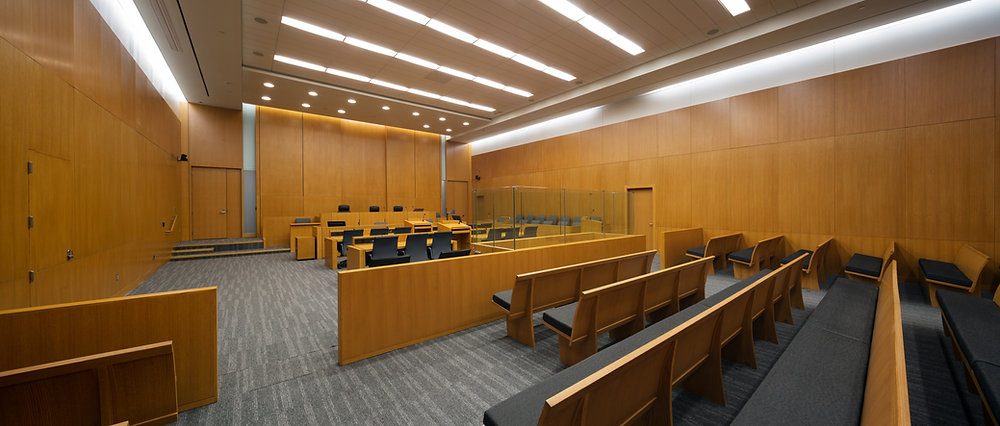
If the investigation turns up enough evidence, and the prosecutor or a private or public accuser files charges, the case moves into the trial phase. Here, the evidence is weighed, and guilt or innocence is decided.
Why it's built this way
The Spanish criminal process is designed to balance two things: investigating crimes effectively, and protecting the fundamental rights of the people involved. That's why measures that restrict someone's rights during an investigation are used carefully and only when genuinely necessary, to avoid undermining the presumption of innocence and other basic protections.