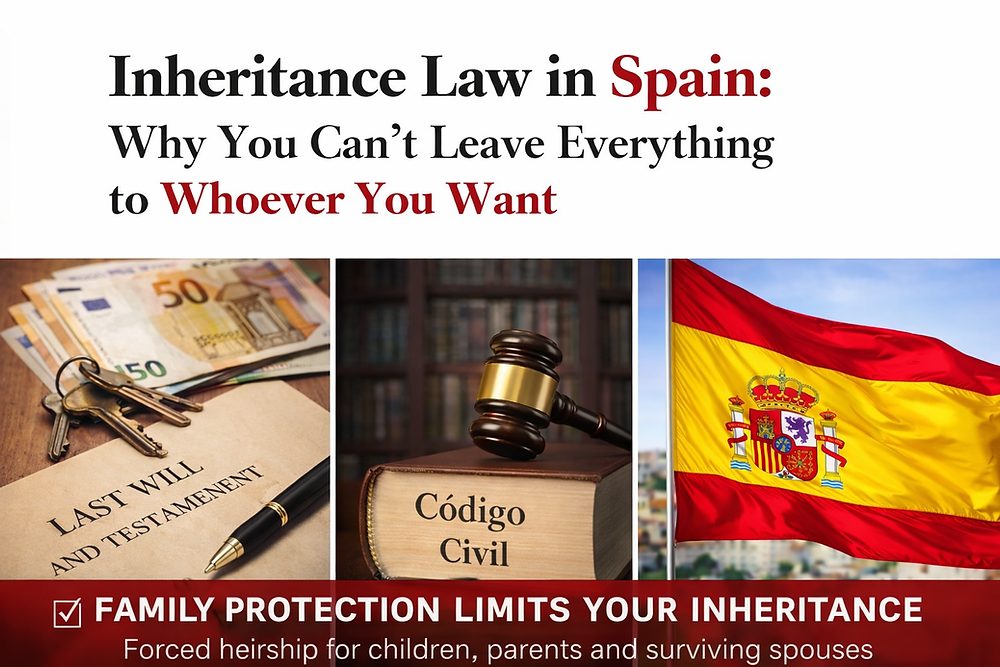
Dealing with an inheritance in Spain can feel overwhelming, especially if you're not sure what the process actually looks like. Here's what tends to happen, and where things can get complicated.
The first question: is there a will?
The first thing a lawyer checks is whether there is a valid will (or advance directive). If there is, the process is considerably easier, since it already sets out who inherits what. If there isn't, a judicial or notarial procedure is needed to determine who is entitled to the inheritance.
Accepting or rejecting the inheritance
There is a legal procedure, known as the Interrogatio in Iure, which requires the heirs to formally state whether they accept or reject the inheritance. Once that's done, the estate is divided. If there is real estate involved, it gets appraised first, since having a clear valuation makes it much easier to work out what each heir is entitled to.
Even with a valuation in hand, it's common for some heirs to disagree with how the inventory has been drawn up. When that happens, the dispute has to be resolved in court, which is exactly when having an experienced lawyer becomes invaluable.
Why getting advice early matters
Inheritance disputes can drag on and drain both money and time. Getting an expert lawyer involved to help the family reach an agreement everyone can live with is usually the fastest and least costly path forward. And if an agreement genuinely can't be reached, that same lawyer can start the judicial or notarial process needed to settle things properly.