A day at the beach in Spain seems simple enough, but there are more rules than most visitors realize, and breaking them can mean a fine of up to 3,000 euros.
Spain does not have one single set of beach rules for the whole country. Instead, each coastal region sets its own rules under the national Coastal Law 22/1988, so what is allowed on one beach can be banned on another just down the coast. That is exactly why so many visitors get caught out: they assume the rules are the same everywhere, and they are not.
Here are the rules that catch people out most often.
- Sleeping on the beach. Camping or spending the night on the beach is against the law across Spain. In some regions, such as Valencia, it counts as a serious offense, with fines ranging from 40 to 1,500 euros.
- Eating and drinking. Barbecuing on the sand is banned and can bring a fine of up to 3,000 euros, though some beaches allow it if you have written permission from the local police. Drinking on the beach can also be fined, from 1,500 to 3,000 euros.
- Smoking. Most Spanish beaches still allow smoking, but a growing number of regions ban it, creating smoke-free beaches. Galicia has the most smoke-free beaches in the country, and Barcelona joined the list in the 2022 summer season. The rule exists mainly because cigarette butts left in the sand take around ten years to break down. The fine is usually around 30 euros.
- Playing music. Playing music through speakers or instruments is not allowed on many beaches. Listening to music in a way that does not disturb people nearby, ideally with headphones, is fine. Regions including Valencia, Murcia, Cantabria, and Tarifa enforce this, with fines up to 700 euros.
- Showering with soap or shampoo. Most beaches have showers so you can rinse off sand and salt, but using soap or shampoo in them is banned across Spain, to protect the sea and marine life. Breaking this rule can bring a fine of around 750 euros.
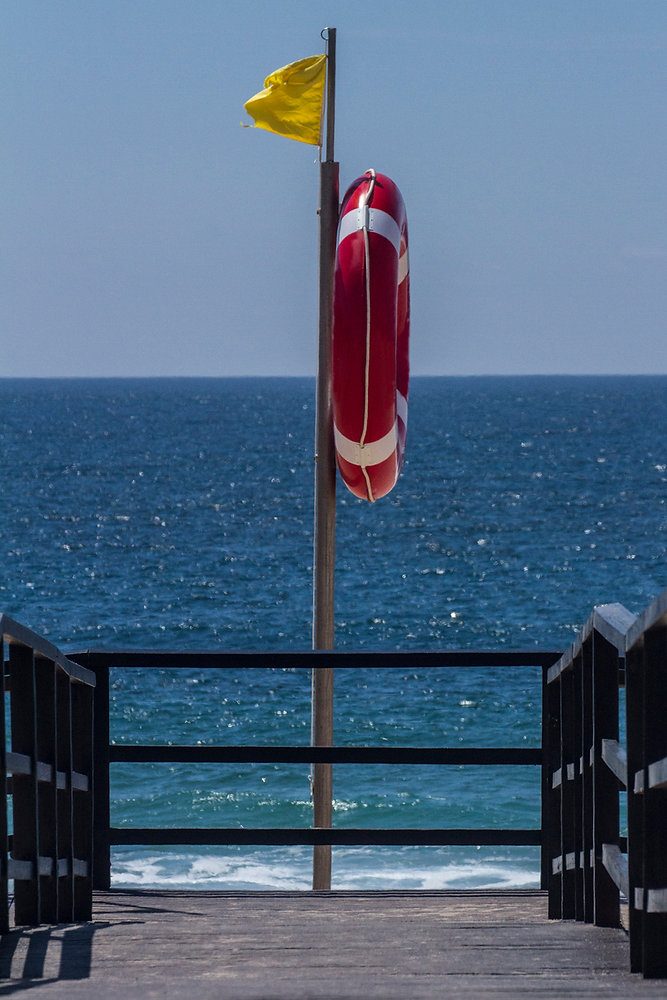
- Swimming when the red flag is up. A red flag means the sea conditions are not safe for swimming. Going in anyway can bring a fine of up to 750 euros.
- Saving your spot on the sand. Getting up early to leave your towels and umbrella down, then leaving the beach for hours, is banned in some places, including the Canary Islands. If you are absent while your things are holding a spot, you can be fined between 750 and 3,000 euros.
- Playing bat and ball games. To avoid hitting other beachgoers, some beaches ban paddle bat games or ball games, including San Javier in Murcia and, in the water, Benidorm. Fines range from 700 to 3,000 euros.
- Pets. Some beaches welcome dogs, but even there you must keep them on a leash, clean up after them, and carry their documentation. Other beaches do not allow dogs at all, and taking one onto a banned beach can bring a fine of between 100 and 1,500 euros.